
Backyards, Pools, and Fireworks: The Indiana Homeowner's Guide to Summer Liability Risks
Key Takeaways
- Summer *significantly* increases homeowner liability due to more guests, risky amenities, and severe weather.
- Standard HO-3 policies cover personal liability and medical payments to others, but limits may be *insufficient* for serious claims.
- Flooding, undisclosed pools/trampolines, and certain recreational equipment are typically *not covered*.
- Pools, hot tubs, and trampolines are "attractive nuisances" that demand *strict safety measures* and disclosure to your insurer.
- Dog bites are Indiana's most frequent liability claim; secure pets during gatherings.
- Grills, fire pits, and fireworks pose *high fire risks* and can lead to major property damage and liability claims.
- Personal umbrella insurance provides an *essential extra layer* of protection above standard policy limits.
- A proactive property inspection and *insurance review* before summer starts can prevent costly accidents and claims.
Table of contents
- 1. Why Summer Is a High-Risk Season for Indiana Homeowners and Personal Liability Coverage
- 2. Understanding Summer Party Liability Coverage in Indiana: The Basics of Your Policy
- 3. Pools and Hot Tubs: High-Exposure Features and Trampoline Homeowners Insurance Considerations in Indiana
- 4. Backyard Injury and Homeowners Claims in Indiana: Decks, Playsets, and Dogs
- 5. Homeowners Insurance and Fireworks in Indiana: Grills, Fire Pits, and Fireworks Risks
- 6. Indiana Weather, Personal Liability Coverage, and Coverage Gaps Every Homeowner Should Know
- 7. Umbrella Insurance in Indiana: How Much Coverage Do You Really Need?
- 8. Summer Party Liability Coverage in Indiana: A Practical Checklist for Homeowners
- Conclusion: Protect Your Summer and Your Financial Future
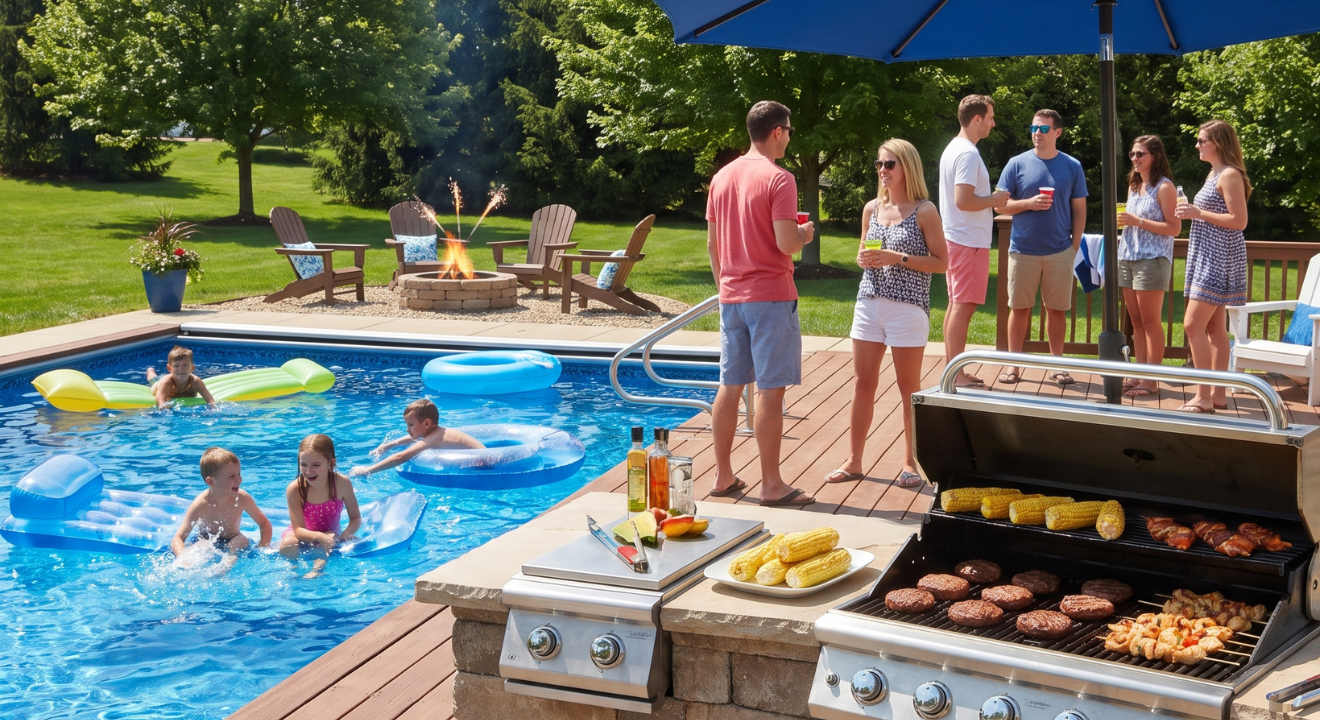
Summer in Indiana is full of good things. Cookouts on the deck, kids splashing in the pool, sparklers on the Fourth of July, and neighbors gathering around the fire pit. It is the season when home feels most alive.
But summer is also the season when your homeowner's liability exposure is at its highest. More guests, more activity, and more potential for accidents means more risk of an insurance claim. And if you have never stopped to ask yourself, "Does homeowners insurance cover pool liability in Indiana?" or reviewed your policy before firing up the grill, *this guide is for you*.
We are going to walk through the most common summer liability risks Indiana homeowners face, explain what your standard policy likely covers and what it may not, and give you practical steps to protect your family, your guests, and your finances this season.
1. Why Summer Is a High-Risk Season for Indiana Homeowners and Personal Liability Coverage
Most people do not think about homeowners insurance on a warm Saturday afternoon when friends are over and the kids are having a great time. But that warm Saturday afternoon is exactly when your personal liability coverage is most likely to matter.
Here is why summer raises the stakes:
- More guests on your property. Cookouts, birthday parties, and pool gatherings bring more people through your yard. More foot traffic means more chances for someone to get hurt or for property to be damaged.
- Risky amenities are in full use. Pools, hot tubs, trampolines, fire pits, and grills all carry higher injury and fire risks during the summer months when they see the most action.
- Alcohol, heat, and crowds are a challenging mix. When alcohol is part of a summer gathering, the risk of accidents goes up. A guest who is injured at your home, or who injures someone else after leaving, can lead to a complex liability claim under your homeowners insurance.
- Indiana's severe weather season runs through summer. Strong thunderstorms, hail, and tornadoes are common in Indiana during these months. Storm damage can create hazards like downed tree branches, damaged deck railings, and slick surfaces that increase the risk of guest injuries.
From an insurance perspective, summer is when homeowners insurance fireworks claims, pool incident claims, dog bite claims, and guest injury claims are most likely to occur. Making sure your personal liability coverage as a homeowner in Indiana is adequate before summer begins is one of the most important steps you can take.
2. Understanding Summer Party Liability Coverage in Indiana: The Basics of Your Policy
Before diving into specific risks, it helps to understand what your homeowners policy actually does when something goes wrong.
What a Standard HO-3 Policy Covers
Most Indiana homeowners carry what is called an HO-3 policy. This is the most common type of homeowners insurance, and it includes two important components related to liability:
Personal liability coverage pays for:
- Bodily injury to others when you are legally responsible. For example, if a guest breaks their ankle on your steps, your liability coverage can help pay for their medical bills and any legal costs.
- Property damage you accidentally cause to others. For example, if your fireworks land on a neighbor's fence and start a fire, liability coverage can step in.
- Your legal defense costs and any settlements or court judgments, up to your policy limit.
Medical payments to others is a smaller coverage that can pay for minor guest injuries without requiring proof that you were at fault. It is designed to handle smaller claims quickly and keep things from becoming legal disputes.
Why Standard Limits May Not Be Enough
Indiana homeowners policies typically start with liability limits somewhere between $100,000 and $300,000. That sounds like a significant amount, but serious injuries can surpass these limits quickly. A single accident involving a pool, a trampoline, or fireworks could generate medical bills, lost wages claims, and pain and suffering damages that far exceed what a basic policy covers.
If your household has a pool, a dog, a trampoline, or if you regularly entertain guests, insurance professionals consistently recommend reviewing whether your current limits are truly adequate.
What Is Not Covered
There are some important gaps in standard Indiana homeowners policies that every homeowner should know:
- Flooding is not covered. If heavy summer rains flood your property and a guest slips on a mud-covered walkway, your standard policy will not pay for flood-related damage. You need a separate flood policy through the National Flood Insurance Program or a private insurer.
- Pools and trampolines you did not disclose to your insurer can lead to denied claims or policy cancellation. If your insurance company does not know you have a pool and someone is injured in it, they may refuse to pay.
- Certain recreational equipment like larger boats or some ATVs may be excluded or require separate coverage.
3. Pools and Hot Tubs: High-Exposure Features and Trampoline Homeowners Insurance Considerations in Indiana
If you have a pool, hot tub, or trampoline on your property, your liability exposure goes up significantly. Insurance professionals refer to these as "attractive nuisances," meaning they naturally draw people, especially children, toward danger.
Why Insurers Flag Pools as High Risk
Pools are consistently listed among the highest homeowner liability exposures. Here is why:
- Pools are directly linked to drowning, slip-and-fall injuries, and diving accidents, all of which can be severe and result in expensive claims.
- Drowning is a leading cause of accidental death in young children. An unsupervised pool area is one of the most dangerous features a property can have.
- Hot tubs and spas carry their own risks, including slips, overheating, and incidents involving alcohol.
Indiana insurance agents specifically flag pools and trampolines as features that increase liability risk and often recommend higher coverage limits when these features are present.
Safety Measures That Matter to Your Insurer
Many insurers and local building codes require or strongly encourage specific safety features around pools. Putting these in place is not just smart for safety, it also protects your insurance coverage:
- Four-sided fencing with self-closing, self-latching gates and locked access around the entire pool area
- Safety pool covers when the pool is not being used
- Alarms on pool gates or doors leading to the pool area
- Non-slip surfaces on pool decks and surrounding areas
- Constant adult supervision of children near any water feature, with a designated sober "water watcher" during gatherings
- Rescue equipment such as a life ring, reaching pole, and a phone kept nearby at all times
Failing to meet safety requirements can be used as evidence of negligence if an accident occurs, and can also lead to denied claims or policy cancellation.
What Pool Ownership Means for Your Coverage
Many insurers require you to disclose that you have a pool. Some conduct exterior inspections and will find it even if you do not report it. Failing to disclose a pool can result in denied claims, gaps in coverage, or non-renewal of your policy.
Some insurance carriers may refuse to cover properties with pools or trampolines altogether, or they may apply specific exclusions for injuries related to those features. Indiana homeowners with pools often see modest premium increases when they add proper pool liability protection, but that extra cost is worth it compared to the financial risk of an uninsured claim.
If you have a pool, it is also worth seriously considering a personal umbrella policy for additional protection above your standard homeowners limits.
4. Backyard Injury and Homeowners Claims in Indiana: Decks, Playsets, and Dogs
Your pool is not the only liability concern in your backyard. Decks, outdoor play equipment, and even your family dog can all be sources of costly claims during summer gatherings.
Decks, Patios, and Outdoor Structures
Decks and patios are where summer entertaining happens, and they are also common sources of guest injuries. Loose boards, protruding nails, unstable railings, and uneven surfaces all raise the risk of trips and falls. Poor or missing outdoor lighting adds to that risk after dark.
Before any summer gathering, take time to:
- Inspect your deck, stairs, and patio for rot, looseness, and tripping hazards
- Make sure handrails are solid and meet local building code
- Add or improve outdoor lighting along walkways and gathering spaces
- Clear away clutter like garden hoses, toys, and tools before guests arrive
These simple steps can prevent a backyard injury and the homeowners claim that follows in Indiana.
Trampolines and Playsets
Insurance companies treat trampolines similarly to pools. They are high-risk amenities that can lead to falls, fractures, and head injuries. An undisclosed trampoline can result in denied coverage if someone is injured on it.
Before you set up a trampoline or playset, check with your insurer to find out whether it is covered, whether it requires specific safety features like an enclosure net, and whether disclosing it will affect your premium or coverage. Some carriers may exclude trampoline-related injuries entirely, which is critical information to have before an accident happens.
Dog Bites: Indiana's Most Common Liability Claim
If you have a dog, pay close attention to this section. Indiana Farm Bureau Insurance reports that dog bites are the single most frequent liability claim they see in the state. Dog bite incidents can involve significant medical costs, pain and suffering damages, and in serious cases, long-term scarring or disability.
Summer gatherings increase the risk of a dog bite. Dogs can become stressed by crowds, loud noises, and unfamiliar children. A normally calm dog may snap or bite when overwhelmed.
To reduce the risk:
- Secure your dog in a separate area away from guests if there is any chance of stress or aggression
- Follow local leash and confinement laws
- Ask your insurance agent about breed-specific restrictions or exclusions in your policy, as some carriers limit or exclude coverage for certain breeds or dogs with a prior bite history
5. Homeowners Insurance and Fireworks in Indiana: Grills, Fire Pits, and Fireworks Risks
Fire is one of the most serious and common summer risks for Indiana homeowners. Whether it comes from the grill, the fire pit, or a box of fireworks, a fire that spreads to your home or a neighbor's property can result in major property damage claims and significant liability exposure.
Grilling Safety and Your Homeowners Policy
Outdoor cooking is a beloved summer tradition, but grease buildup, grills placed too close to the home, and unattended flames are among the leading causes of home fire claims. Homeowners insurance in Indiana typically covers fire damage to your dwelling, but your liability coverage becomes critical if the fire spreads to a neighbor's property or a guest is burned.
To reduce the risk of a grill-related fire and the insurance claim that follows:
- Keep grills at least 10 feet away from your home, fence, deck railing, or any flammable material
- Clean grease trays and drip pans regularly to prevent dangerous flare-ups
- Never leave a lit grill unattended
- Keep a fire extinguisher or fire blanket within easy reach of the grilling area at all times
Fire Pits and Outdoor Heaters
Fire pits are popular gathering spots, but sparks can ignite dry grass, mulch, and nearby structures. Children are especially vulnerable to burn injuries around open flames. Always check local burn ordinances before lighting a fire pit, keep water or a fire extinguisher nearby, and establish clear boundaries that keep children a safe distance from the flames.
Fireworks Liability and Property Damage
Around Independence Day and other summer celebrations, fireworks-related fire claims rise sharply. In dry conditions, a single spark from a consumer firework can ignite vegetation, fencing, or even roofing materials.
When it comes to homeowners insurance and fireworks in Indiana, here is what you need to know:
- Fireworks set off too close to homes, garages, vehicles, trees, or dry landscaping are a serious fire hazard
- Misfires and errant rockets can land on a neighbor's property, creating both property damage liability and potential bodily injury claims
- Fire damage from legal fireworks used responsibly is often covered under your dwelling protection, but illegal use or gross negligence can create disputes with your insurer
- If your fireworks injure a guest or damage a neighbor's property, your liability coverage may respond, depending on your policy language
The safest advice: follow all local laws regarding fireworks use, and whenever possible, attend a professional community display rather than setting off consumer fireworks at home.
6. Indiana Weather, Personal Liability Coverage, and Coverage Gaps Every Homeowner Should Know
Indiana homeowners face a unique combination of summer risks. Beyond the pools and parties, the state's weather patterns create their own set of hazards that intersect directly with liability exposure.
Severe Weather Creates Hidden Hazards
Indiana's summer storm season brings tornadoes, severe thunderstorms, heavy hail, and significant rainfall. These events can damage roofs, snap tree branches onto decks, leave behind slippery mud-covered walkways, and weaken outdoor structures like stairs and railings.
A standard HO-3 homeowners policy in Indiana typically covers wind and hail damage, fire, lightning, falling objects, and related perils. What it does not cover is flooding. If a summer storm sends water rushing through your yard and a guest slips on a flooded walkway, your standard policy will not cover flood-related losses. A separate NFIP or private flood insurance policy is required for that type of protection.
The liability concern with storm damage is this: if a storm damages your deck railing or drops a branch onto your walkway and you do not repair it before hosting guests, that damaged condition becomes a hazard you knew about. If someone is then injured on it, your failure to address the hazard can be viewed as negligence.
Coverage Gaps Indiana Homeowners Often Discover Too Late
Many Indiana homeowners go years without reviewing their liability limits or checking whether their policy accounts for new features they have added to their property. Common coverage gaps include:
- Liability limits that are too low to cover a serious injury claim
- Pools, trampolines, or fire pits that were never disclosed to the insurer
- Dog-related incidents that may be restricted or excluded under the policy
- No flood coverage despite living in an area prone to heavy summer rains
The time to find and fix these gaps is before summer begins, not after a claim is filed.
7. Umbrella Insurance in Indiana: How Much Coverage Do You Really Need?
If you have a pool, a dog, a trampoline, or if you regularly host summer gatherings, a personal umbrella policy is one of the most valuable and cost-effective types of coverage you can add to your insurance portfolio.
Why Standard Limits Fall Short
Most Indiana homeowners carry liability limits of $100,000 to $300,000. That feels like a lot until you consider what a serious injury actually costs. A spinal cord injury from a pool diving accident, a severe dog bite that causes permanent scarring, or a fireworks burn that requires surgery and months of rehabilitation can all generate costs that blow right through a standard policy limit.
When that happens, you are personally responsible for everything above the policy maximum. That can mean your savings, your home equity, and your future income are all at risk.
What a Personal Umbrella Policy Does
Umbrella insurance in Indiana provides an extra layer of liability protection that sits on top of your existing homeowners and auto policies. Most umbrella policies start at $1 million in additional coverage and are typically affordable relative to the protection they provide.
If a serious claim exceeds your homeowners liability limit, the umbrella policy kicks in to cover the remainder, up to its own limit. It can also cover some situations that your homeowners policy does not address.
Who Should Strongly Consider Umbrella Coverage
An umbrella policy is especially worth discussing with your agent if you:
- Own a pool or hot tub
- Have a trampoline, large playset, or frequently host teen gatherings at your home
- Own dogs, particularly larger breeds or dogs with any history of aggression
- Host large backyard parties or events
- Have significant assets, savings, or income that would be at risk in a lawsuit
The peace of mind that comes with umbrella protection is particularly valuable during summer, when liability risks are at their highest.
8. Summer Party Liability Coverage in Indiana: A Practical Checklist for Homeowners
The best time to reduce your summer liability risk is before anyone sets foot in your backyard. Use this checklist to make sure your property, your safety practices, and your insurance coverage are all in good shape before the season gets underway.
Property and General Maintenance
- Repair loose boards, steps, and railings on decks, porches, and patios before hosting any events
- Improve outdoor lighting along walkways, steps, and gathering areas, especially for evening events
- Remove trip hazards like garden hoses, equipment, and children's toys from walkways before guests arrive
Pool and Hot Tub Safety
- Install and maintain code-compliant four-sided fencing with self-closing, self-latching gates around the entire pool area
- Keep rescue equipment such as a life ring and reaching pole, along with a charged phone, beside the pool at all times
- Never leave children unattended around water, and designate one sober adult as the "water watcher" during all gatherings
- Use a safety pool cover when the pool is not in active use
- Disclose your pool to your insurer, confirm what safety features are required for full coverage, and ask about umbrella policy options
Backyard Amenities
- Inspect trampolines and playsets for stability, missing hardware, and wear before allowing use
- Install enclosures and safety nets on trampolines and lock access when they are not in use
- Secure dogs and other pets in a separate, comfortable area away from guests whenever there is any risk of biting or rough behavior
Fire Risk and Fireworks Safety
- Maintain at least 10 feet of clearance between grills and any structure, fence, or flammable material
- Clean grease trays and drip pans regularly and keep a fire extinguisher accessible near the grill
- Follow all local burn ordinances and fireworks laws
- Attend professional fireworks shows whenever possible rather than using consumer fireworks at home
- If using legal fireworks, keep them well away from all structures and dry vegetation, have water or a hose ready, and ensure only sober, responsible adults are handling them
Electrical Safety
- Inspect all outdoor extension cords and equipment for fraying, cracking, or damage and replace anything defective
- Use only cords and equipment rated for outdoor use
- Avoid overloading outlets or daisy-chaining extension cords
- Keep all electrical connections and power sources well away from pool areas, hot tubs, and water features
Insurance Review
- Confirm your current liability limits and whether they realistically match your risk profile, especially if you have a pool, pets, or frequent guests
- Ask your agent specifically about coverage conditions for pools, trampolines, and fire pits
- Ask about dog-related liability and any breed-specific restrictions or prior-incident exclusions in your policy
- Get a quote for a personal umbrella policy and weigh the cost against the protection it provides
Conclusion: Protect Your Summer and Your Financial Future
Summer is meant to be enjoyed. The cookouts, the pool days, the sparklers, and the backyard gatherings are all part of what makes this season so special. But enjoying summer to its fullest also means making sure you are prepared for the unexpected.
Whether it is a guest slipping on a wet pool deck, a dog bite during a party, fireworks that go sideways, or a grill fire that spreads, the liability risks Indiana homeowners face during summer are real and they can be costly. The good news is that with the right coverage in place and a few smart safety practices, you can enjoy your summer without constantly worrying about what could go wrong.
If you have not reviewed your homeowners insurance policy recently, *now is the time*. Check your liability limits, make sure all of your property features are properly disclosed, and ask your agent whether a personal umbrella policy makes sense for your household.
The team at Timothy Doud Allstate is here to help Indiana homeowners understand their coverage, identify gaps, and find the right protection for summer and beyond. Reach out today for a policy review and make sure your coverage is ready for everything this season has in store.
Frequently Asked Questions
Does my standard homeowners insurance cover pool accidents?
Yes, generally, your personal liability coverage under a standard HO-3 policy extends to accidents occurring in your pool. However, specific exclusions or requirements may apply, especially if the pool was not disclosed to your insurer or if certain safety measures are not met. It's crucial to confirm this with your insurance agent.
How much liability coverage do I need if I have a pool or trampoline?
The recommended liability coverage often increases significantly if you have high-risk features like pools or trampolines. While standard policies may offer $100,000-$300,000, many experts suggest at least $500,000 or even $1,000,000 in liability coverage, often achieved through a personal umbrella policy, to adequately protect against serious injury claims.
Is flood damage covered by my homeowners insurance in Indiana?
No, standard homeowners insurance policies in Indiana typically *do not* cover flood damage. You would need to purchase a separate flood insurance policy, often through the National Flood Insurance Program (NFIP) or a private insurer, to be protected against losses from flooding.
What happens if my dog bites someone at a summer party?
Dog bites are a leading cause of liability claims. Your homeowners insurance personal liability coverage would typically apply, covering medical expenses and legal fees up to your policy limits. However, some policies have breed restrictions or exclude coverage for dogs with a prior bite history. It's essential to understand your policy's specifics and secure your dog if they may become stressed by guests.
Does my homeowners insurance cover fireworks-related damage?
Fire damage to your home from legal fireworks used responsibly is generally covered under your dwelling protection. However, if your fireworks injure a guest or damage a neighbor's property, your liability coverage may respond. Illegal use, gross negligence, or specific policy exclusions could lead to denied claims. The safest approach is to attend professional displays.
Protecting What Matters Most
Connect with Timothy Doud: Allstate Insurance for personalized guidance, trusted local support, and coverage built around your family’s needs.

- Licensed Experts
- Local Agents
- Quick Response